
Ground Support Carts for Airports & Ports
Plan practical low-speed transport for airport terminals, baggage areas, cargo facilities, marine terminals, warehouses, docks, parking zones, and service routes. Compare electric and gasoline configurations for luggage movement, materials and tools, staff transport, inspections, and ground crew shuttles.
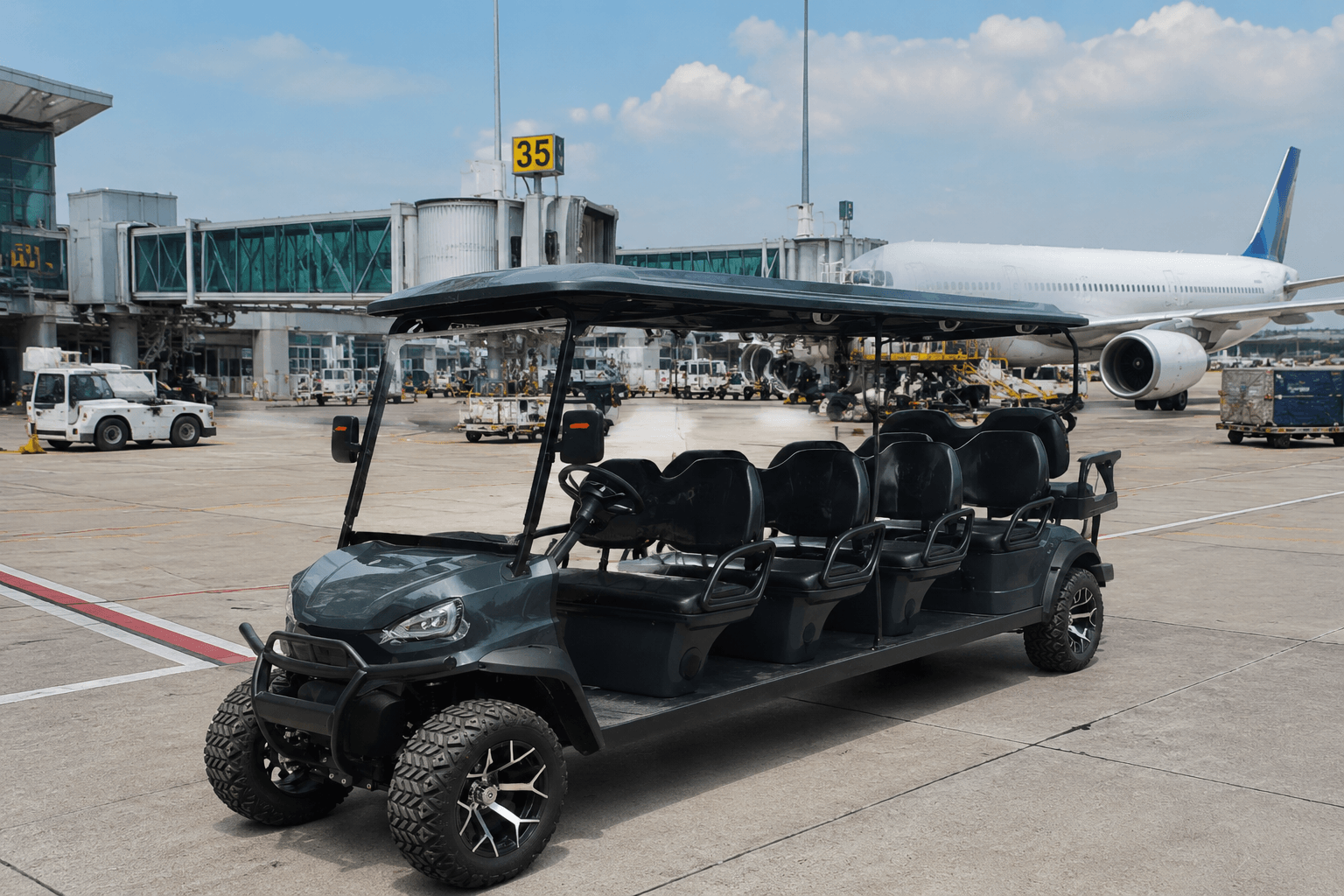
Ground Support Cart Configurations for Airports & Ports
This catalog set separates luggage movement, cargo and tool transport, compact personnel travel, and six-passenger crew shuttle service. Compare each cart by operational role, route surface, access restrictions, shift demand, charging or fueling access, destination requirements, and the equipment included in the final project specification.

Custom Airport Luggage Cart
A catalog special model for luggage movement between terminals, storage areas, service points, and baggage-handling zones. The displayed vehicle is electric; its final seating, cargo layout, dimensions, capacity, and technical specification must be confirmed for the actual operation.
- Application
- Airport luggage movement
- Powertrain
- Electric only
- Seating / Layout
- Custom configuration shown
- Battery & Motor
- Confirm by project
- Cargo Dimensions
- Confirm by project
- Required Review
- Route, load, rules, destination

Custom Cargo Tray Ground Support Cart
An electric special model for moving tools, maintenance items, packaged materials, and small equipment between port service areas, terminal warehouses, docks, and operating points. Cargo dimensions and load requirements are reviewed per project.
- Application
- Materials and tools
- Powertrain
- Electric only
- Seating / Layout
- Custom configuration shown
- Battery & Motor
- Confirm by project
- Load / Cargo Tray
- Confirm by project
- Required Review
- Cargo, route, surfaces, rules
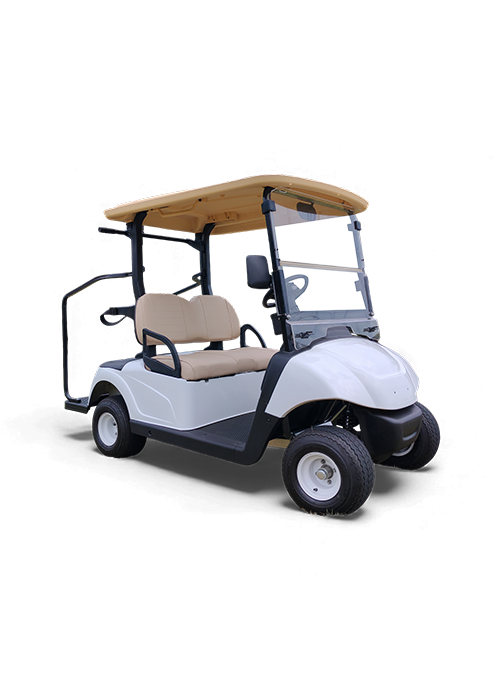
Model-E2 Ground Support Personnel Cart
A two-passenger electric configuration for operations supervisors, inspectors, service coordinators, document movement, and staff travel on suitable paved routes between terminals, warehouses, offices, docks, and support facilities.
- Seating
- 2 passengers
- Powertrain
- Electric only
- Battery
- 48V 100Ah lithium
- Motor
- 4kW
- Wheels
- 18x8.5-8 road tires
- Equipment
- Folding windshield, independent suspension
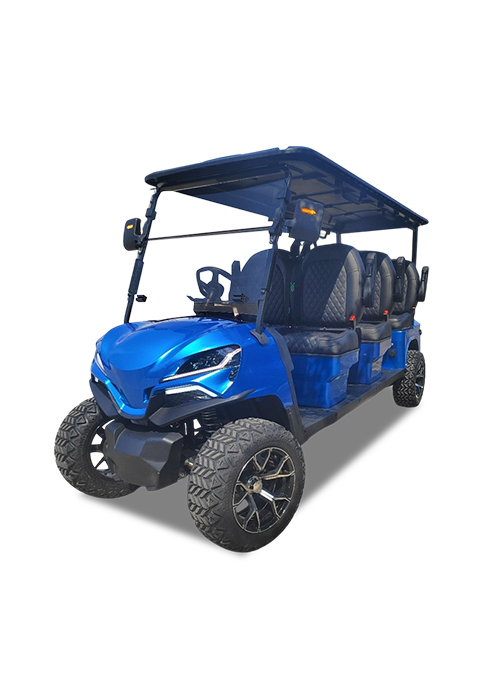
Model-S6 Ground Crew Shuttle
A six-passenger configuration for scheduled ground crew transfers between terminals, parking areas, cargo buildings, port facilities, warehouses, docks, and other service points. Model-S is available with gasoline or electric powertrains.
- Seating
- 6 passengers
- Powertrain
- Gas or electric
- Electric Battery
- 48V 100Ah lithium
- Motor
- 5kW
- Wheels
- 23x10-12 off-road tires
- Catalog Features
- Windshield, LED lights, rear storage
The airport luggage and cargo-tray carts are catalog special models without a complete published technical table. Confirm dimensions, payload, seating, battery, motor, equipment, operating-zone requirements, destination rules, and the approved quotation before ordering. Model-E2 and Model-S6 data above reflects the displayed catalog configurations.
Plan the Fleet Around the Ground Operation
A useful airport or port fleet plan starts with personnel and cargo tasks, controlled-zone access, route length, shift peaks, surfaces, gradients, pedestrian interaction, charging or fueling space, local operating rules, and service responsibilities. Match each vehicle to a defined ground-support role.
Quiet Electric Terminal Operations
Electric configurations can support lower-noise movement around terminals, warehouses, passenger areas, and indoor-adjacent service zones. Charging access, route demand, duty cycle, and permitted operating areas must still be confirmed.
Crew Capacity Planning
Compare custom luggage and cargo layouts, two-passenger personnel carts, and six-passenger shuttles according to staff per trip, shift changes, boarding frequency, route width, stops, and required passenger equipment.
Airport and Port Identity Options
Depending on the model and order, choices can include body and seat colors, operator logos, fleet numbers, wheels, lighting, windshields, mirrors, storage, and role-specific equipment.
Route-Specific Vehicle Roles
Use luggage carts for baggage movement, cargo-tray carts for materials and tools, compact personnel carts for staff routes, and higher-capacity shuttles for ground crews instead of forcing one configuration across every task.
Ground Route Safety Review
Review controlled-zone access, pedestrian and equipment interaction, gradients, surfaces, crossings, docks, boarding points, road width, visibility, restraints, weather exposure, speed policies, and local vehicle-use rules.
Service and Parts Planning
Confirm maintenance schedules, warranty scope, technical documents, recommended spare parts, charging or fueling arrangements, and local service responsibilities for each model.
Application-Based Configuration
Provide facility type, route map, personnel and cargo tasks, access restrictions, quantity, surfaces, shift schedule, powertrain preference, destination, and required equipment for a relevant recommendation.
Verified Final Specification
Catalog configurations are a starting point. Confirm seating, cargo dimensions, load requirement, powertrain, battery, motor, wheels, restraints, accessories, customization, documentation, site rules, and commercial terms before ordering.
Compare Airport & Port Ground Support Carts
Compare each recommended cart by operating role and the catalog information currently available. Special luggage and cargo models require project-level technical confirmation; gasoline specifications for Model-S6 and all route-specific performance must also be confirmed for the selected order.
| Specification | Airport Luggage Cart | Cargo Tray Cart | Model-E2 | Model-S6 |
|---|---|---|---|---|
| Primary Role | Luggage movement | Materials and tools | Personnel movement | Ground crew shuttle |
| Capacity / Layout | Custom; confirm | Custom; confirm | 2 passengers | 6 passengers |
| Powertrain | Electric only | Electric only | Electric only | Gas or electric |
| Battery Shown | Confirm by project | Confirm by project | 48V 100Ah lithium | 48V 100Ah lithium |
| Motor Shown | Confirm by project | Confirm by project | 4kW | 5kW |
| Wheels / Tires | Confirm by project | Confirm by project | 18x8.5-8 road tires | 23x10-12 off-road tires |
| Cargo / Equipment | Luggage configuration shown | Cargo tray shown | Folding windshield, independent suspension | Windshield, LED lights, rear storage |
| Technical Completeness | Project confirmation required | Project confirmation required | Displayed configuration verified | Displayed electric configuration verified |
| Final Specification | Confirm before order | Confirm before order | Confirm before order | Confirm before order |
The comparison excludes unverified speed, range, charging time, gradeability, payload, cargo dimensions, and gasoline-engine data. Request a current technical sheet based on actual airport or port routes, controlled zones, surfaces, personnel or cargo demand, operating hours, site rules, and selected powertrain.
From Ground Routes to a Confirmed Fleet Plan
Airport operators, airlines, ground-service providers, port operators, cargo terminals, warehouse teams, maintenance contractors, and procurement specialists can use this process to turn daily ground-support requirements into a model shortlist and verifiable quotation.
Map Operational Routes
Record terminals, baggage areas, docks, warehouses, cargo buildings, parking, checkpoints, restricted zones, gradients, surfaces, crossings, route width, shift peaks, weather exposure, and charging or fueling locations.
Define Personnel and Cargo Tasks
Match the luggage cart to baggage movement, the cargo-tray cart to tools and materials, Model-E2 to compact personnel travel, and Model-S6 to scheduled ground crew transfers.
Confirm Technical Details
Approve powertrain, battery, motor, seating, cargo dimensions, load requirement, tires, windshield, mirrors, lighting, restraints, storage, colors, logos, documentation, quantity, site requirements, and commercial terms.
Plan Delivery and Support
Confirm packing, destination, shipping responsibilities, operator handover, charging or fueling plan, maintenance documents, warranty scope, and recommended spare parts.
What Airport & Port Procurement Teams Should Confirm
Use these questions to compare quotations on the same basis. Pricing is not directly comparable when vehicle role, cargo layout, seating, battery, powertrain, route suitability, equipment, customization, documentation, warranty, or shipping responsibility differs.
Where and When Will Ground Teams Operate?
Record route distance, terminals, docks, warehouses, checkpoints, restricted areas, stops, gradients, surfaces, turning space, crossings, personnel per trip, shift peaks, operating hours, and weather exposure.
What Must Move, and Under Which Site Rules?
Define people, luggage, tools, or materials; required cargo dimensions and load; pedestrian and equipment interaction; access control; visibility; speed rules; driver authorization; lighting; restraints; weather protection; and local operating requirements.
Is the Complete Operating Scope Included?
Confirm model, role, powertrain, battery, motor, seats, cargo layout, dimensions, load requirement, tires, equipment, customization, charging or fueling, maintenance, spare parts, warranty, documentation, packing, and shipping.
Airport & Port Ground Support Cart FAQ
Concise answers for airport operators, airlines, ground-service providers, port operators, cargo terminals, warehouse teams, maintenance contractors, and procurement teams comparing ground support carts.
Which cart is suitable for airport or port ground support?
Use a custom airport luggage cart for baggage movement, a cargo-tray cart for tools and materials, Model-E2 for compact personnel travel, and Model-S6 for scheduled ground crew transfers. Selection depends on the task, route, operating zone, people or cargo per trip, surfaces, shift demand, powertrain infrastructure, and required equipment.
Are airport and port ground support carts electric or gasoline?
The custom airport luggage cart, cargo-tray cart, and Model-E are shown as electric-only product families in the catalog. Model-S is offered with gasoline or electric powertrains. Choose only after confirming site rules, route demand, charging or fueling infrastructure, operating hours, and the exact ordered specification.
What information is needed to select a luggage or cargo cart?
Provide the items being moved, maximum required load, cargo dimensions, loading method, route length, surface, gradient, turning space, access limits, shift hours, weather exposure, and destination requirements. The special models require a project-specific technical confirmation rather than selection from appearance alone.
Can ground support carts be customized for airport or port operations?
The Shining Vehicle catalog shows special models and customization across selected vehicles, including colors, seats, logos, wheels, lighting, storage, and application-specific layouts. Availability, engineering feasibility, minimum order quantity, artwork, price, and production details must be confirmed for the chosen project.
What information is needed for a ground support cart quotation?
Provide the airport or port facility type, route map, personnel and cargo tasks, people or load per trip, cargo dimensions where relevant, quantity, access restrictions, gradients, surfaces, shift hours, preferred powertrain, charging or fueling access, required equipment, destination, and target delivery period.
Ready to Plan Your Ground Support Fleet?
Discuss airport or port routes, personnel and cargo tasks, luggage handling, required load and dimensions, restricted areas, electric or gasoline preference, quantity, destination, and delivery schedule with our sales team.